Global buyers are entering 2026 with stricter vacuum performance, uptime, and traceability requirements. The right vacuum valve now supports more than pressure isolation. It protects process stability.
Reports show continued demand. MarketsandMarkets projects the global vacuum equipment market to grow from about USD 5.9 billion in 2024 to USD 7.5 billion by 2029. Grand View Research also expects steady expansion through 2030. Their estimates differ because product categories and regional coverage differ. That difference deserves attention.
Semiconductor, display, pharmaceutical, solar, and research facilities are driving this demand. SEMI’s World Fab Forecast continues to indicate strong investment in global semiconductor manufacturing capacity. More chambers mean more valves, seals, actuators, and maintenance decisions. A small leakage rate can become an expensive production problem.
John F. O’Hanlon, a respected vacuum technology author, explains, “A vacuum is a volume of space from which air and other gas has been removed.” His definition is simple. Valve selection is not.
Butterfly, angle, gate, diaphragm, and control valves each solve different engineering problems. Buyers must compare conductance, pressure range, temperature tolerance, cycle life, materials, actuation, and service support. Local standards and spare-parts availability also matter. A low purchase price may hide higher ownership costs.
This guide examines the best vacuum valve types for global buyers in 2026. It connects published market evidence with practical selection experience. No single valve wins every application. That is the uncomfortable part. Even a technically correct choice can fail when installation quality, contamination control, or maintenance planning is overlooked.
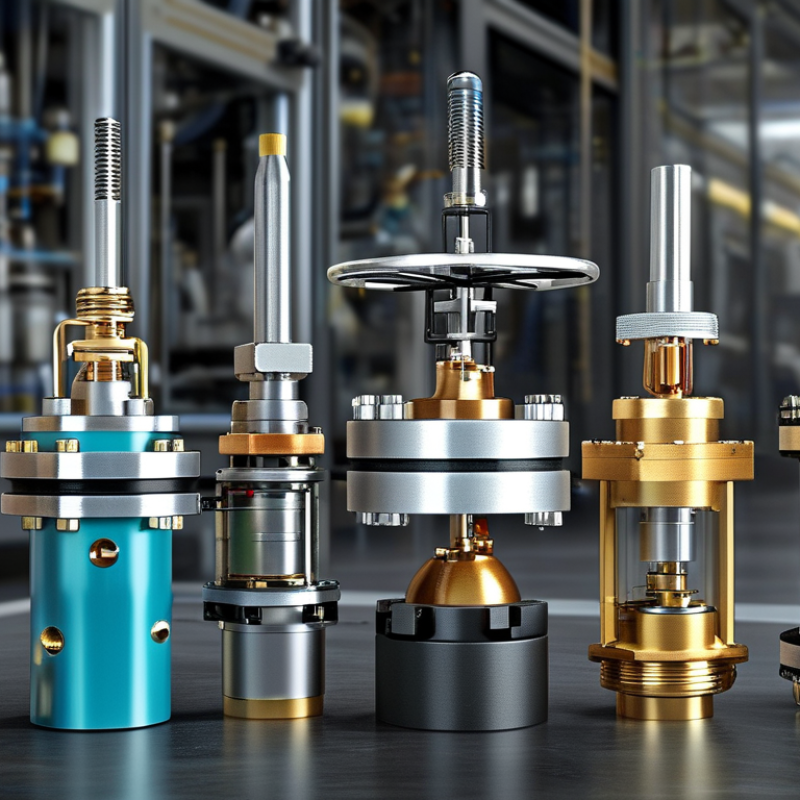
For global buyers in 2026, vacuum valve selection begins with pressure, not connection size. At 10⁻³ mbar, butterfly and elastomer-sealed angle valves can provide economical isolation. Their seals are practical, but outgassing and permeation may limit stability. At 10⁻⁶ mbar and below, gate valves usually offer better conductance and lower particle generation. Metal-sealed versions are preferred for demanding ultra-high-vacuum service. The pressure boundary is not perfectly clean.
From 10⁻⁹ to 10⁻¹² mbar, all-metal construction, low-outgassing materials, and careful bakeout become decisive. Small leaks matter. A leak rate near 10⁻¹⁰ mbar·L/s can undermine a sensitive chamber. Variable leak valves also need fine control when gas dosing affects a process or measurement. ISO 21360-1 defines methods for measuring vacuum pump performance, while SEMI technical guidance stresses contamination control in semiconductor environments. These references support testing, but they do not replace application trials. The 2024 WSTS forecast placed global semiconductor sales at about 588.4 billion US dollars, showing why reliable vacuum hardware remains commercially important. Still, buyers sometimes compare only ultimate pressure. That is an incomplete decision. Check conductance, cycle life, actuation speed, seal temperature, flange alignment, and documented helium-leak results. A valve rated for 10⁻¹² mbar may perform poorly if installation practices are careless.
For global vacuum buyers, valve geometry directly affects pump performance and chamber layout.
Gate valves offer a wide, straight passage, so they usually provide high conductance and low pressure loss. Their bodies can be large, however, especially around bigger ports. They suit isolation between a chamber and pumping line.
Angle valves turn the flow path by 90 degrees. This shape often saves floor space and supports compact chamber designs, but the bend can reduce conductance.
Inline valves keep ports on one axis and simplify installation. They work well in narrow process lines and modular systems.
Size should match the real flow path, not only the flange diameter. A narrow internal opening can limit performance despite a large connection.
Sealing material also deserves careful review. Elastomer seals are practical for moderate temperatures and frequent cycling. Metal seals tolerate harsher heat and can offer stronger leak control, but they may need cleaner surfaces and more precise alignment.
Small particles on a sealing edge can cause trouble.
Field selection should include conductance data, valve stroke, installation clearance, bake temperature, and tested leak rate. A short valve may fit better than a larger high-conductance model. That trade-off is easy to miss.
My early selections often focused too heavily on port size. Actual chamber volume, pump distance, and cycle frequency mattered more. No valve wins every test.
Perform a layout check before purchase, and verify performance under the buyer’s working temperature and pressure range.
2026 Best Vacuum Valve Types for Global Buyers?
Butterfly and pendulum valves support high-throughput vacuum control when chamber volume and conductance matter. A butterfly valve rotates a circular disc inside the flow path. Its compact body allows fast positioning, simple maintenance, and efficient throttling. It suits many process systems operating toward 10⁻³ mbar, provided the seal material and actuator are correctly selected.
Pendulum valves use a large hinged plate that moves across the opening. Their geometry offers excellent conductance and low pressure loss, especially on deposition, coating, and semiconductor process lines. They can isolate a chamber quickly while preserving pumping performance. Speed matters. Not always. Excessive motion can create vibration, particle risk, or unstable pressure control.
A reliable selection begins with real operating data. Check base pressure, gas chemistry, temperature, cycle frequency, flange size, and required leak rate. Metal seals tolerate demanding temperatures, while elastomer seals may provide simpler maintenance but narrower limits. During commissioning, pressure response should be measured at several valve positions, not only fully open or closed. This reveals dead zones and control delay.
One practical warning is often missed: a valve rated for 10⁻³ mbar may not maintain that pressure in a poorly designed system. Conductance losses, contaminated seals, weak pumping, and incorrect gauge placement can dominate performance. Global buyers should request material certificates, tested leak values, control protocols, and service documentation before comparing prices. Configuration details often matter more than the valve name.
Typical engineering comparison for vacuum systems operating around the 10⁻³ mbar range
| Evaluation Dimension | Butterfly Valve | Pendulum Valve | Selection Implication for Global Buyers |
|---|---|---|---|
| Primary operating principle | A circular disc rotates around an axis to regulate gas flow through a pipe or chamber connection. | A plate moves across the valve opening and seals against a seat; the plate is commonly driven by a linear or articulated mechanism. | Choose the mechanism that matches the required combination of throttling, isolation, conductance and installation space. |
| Best control function | Continuous throttling Well suited to regulating pumping speed, gas flow and chamber pressure. |
High-conductance isolation Suitable for opening or closing a large flow path between a chamber and a pump. |
Butterfly valves are generally preferred for fast pressure adjustment; pendulum valves are generally preferred where a clear, large aperture is important. |
| Suitability near 10⁻³ mbar | Commonly suitable for medium- and high-vacuum process control when the seal material, actuator and body design are rated for the intended pressure range. | Commonly suitable for medium- and high-vacuum pump isolation and chamber control when the seat, drive system and sealing arrangement are correctly specified. | Confirm the manufacturer’s pressure rating, leak-rate specification, bake-out limit and materials before purchase; pressure suitability is design-specific. |
| Open-flow conductance | High for its compact size, but the disc remains in the gas path and creates some flow obstruction even when open. | Very high when fully open because the plate can move away from the main flow path and provide a large clear aperture. | For maximum pumping speed and minimum pressure drop, a pendulum design normally has an advantage at comparable nominal aperture sizes. |
| Throttling precision | Good for repeatable angular control, especially when paired with a position sensor and closed-loop pressure control. | Good to very good in designs intended for throttle service, but the control response depends strongly on plate travel, actuator resolution and control software. | Specify control mode, position feedback, repeatability and allowable pressure fluctuation rather than evaluating valve type alone. |
| Typical actuation behavior | Rotary motion with a short travel path; commonly enables fast opening and closing. | Linear or compound motion; generally requires more travel and may have a slower mechanical cycle than a butterfly valve. | Butterfly valves are usually advantageous for rapid process cycling; pendulum valves are advantageous when aperture and sealing geometry are higher priorities. |
| Installation footprint | Compact and lightweight relative to many large-aperture vacuum valves. | Usually requires more axial or lateral clearance for the moving plate and actuator assembly. | Check service access, actuator clearance, flange orientation and replacement space in the equipment layout. |
| Typical nominal aperture range | Commonly available from small laboratory sizes to large process-piping sizes; exact ranges vary by vacuum design and flange standard. | Commonly available in medium to very large apertures for semiconductor, coating, research and industrial vacuum equipment. | Compare effective open aperture and conductance, not only the nominal flange diameter. |
| Isolation performance | Can provide effective isolation when fitted with an appropriate elastomer or metal seal, although the disc and seat geometry must be considered. | Designed for strong chamber-to-pump isolation; sealing performance depends on seat configuration, actuator force and seal material. | For ultra-clean or demanding isolation service, request the specified leak rate using the applicable test method. |
| Vacuum cleanliness | Elastomer-sealed versions are widely used, while metal-sealed versions can be selected for lower outgassing and higher-temperature applications. | Available with elastomer or metal sealing arrangements; metal-sealed configurations are generally preferred for demanding clean-vacuum processes. | Match seal material, internal surface finish, lubricant policy and bake-out requirements to the process chemistry. |
| Maintenance considerations | Typically straightforward to inspect because of its compact rotary assembly; seal and disc alignment remain important. | Requires careful inspection of the plate, seat, guide mechanism and actuator because contamination can affect travel and sealing. | For high-cycle equipment, compare service intervals, spare-seal availability, sensor replacement and local technical support. |
| Energy and operating cost tendency | Generally low actuator energy because the rotary travel is short and the mechanism is compact. | May require greater actuator force and a more complex drive system, particularly for large apertures or high differential pressure. | Evaluate total cost of ownership, including actuator power, preventive maintenance, downtime and replacement parts. |
| Typical applications | Pressure control, gas inlet regulation, roughing-line control, coating equipment, load-lock systems and general process vacuum control. | Chamber isolation, pump isolation, transfer systems, large coating tools, semiconductor equipment and high-throughput vacuum lines. | Use the butterfly type for compact, responsive flow control; use the pendulum type for large-aperture throughput and robust isolation. |
| Recommended buyer specification | Nominal size, flange standard, operating pressure, maximum differential pressure, actuator speed, position feedback, seal type, temperature and leak rate. | Nominal size, clear aperture, flange standard, open/close cycle time, throttle capability, seat material, bake-out temperature, position feedback and leak rate. | Request dimensional drawings, conductance data, cycle-life information and test certificates before approving a purchase order. |
| Overall fit for high-throughput control up to 10⁻³ mbar | Best for compact, fast throttling | Best for large-aperture throughput and isolation | Neither type is universally superior. The final choice should be based on conductance, control accuracy, leak rate, cleanliness, cycle life and available installation space. |
For global buyers, all-metal UHV valves deserve close attention when contamination control and repeatable isolation matter. Their metal seals tolerate bakeout temperatures that can damage elastomer-based designs. In qualified systems, leak rates can fall below 10⁻¹⁰ mbar·L/s. Test conditions matter.
Gate valves suit straight-through chambers and large conductance paths. Angle valves help compact layouts and reduce fitting complexity. All-metal isolation valves often use copper gaskets or carefully engineered metal seals. A clean flange face is essential. One small scratch can defeat an excellent sealing design.
During commissioning, technicians should record helium leak results, bakeout temperature, cycle count, and actuator position. These details make supplier comparisons more reliable. Ask whether the stated leak rate applies after bakeout, at room temperature, or both. The difference is significant. Materials also need review. Stainless steel, copper, and selected alloys behave differently under thermal cycling.
I have seen projects focus on purchase price and overlook replacement seals, alignment tools, or service access. That approach can create expensive delays. A valve may meet its catalog specification but still perform poorly in a contaminated chamber. Rechecking particle control, torque settings, and flange alignment is worthwhile. Not every “UHV” label means the same thing. Independent test records provide stronger evidence than marketing language.
For global buyers in 2026, vacuum valve selection starts with interface discipline, not marketing language. ISO 2861 helps define clamp-type quick-release connections, while ISO 1609 addresses vacuum flange dimensions. These standards reduce mismatch risks across pumps, chambers, and service tools. Still, standard compliance must be verified on drawings. Similar-looking flanges can fail during installation.
Valve type should match the process. An isolation valve suits simple chamber separation, while an angle valve can save valuable space. Gate valves support large openings and low conductance loss. All-metal valves are preferable for high-temperature or ultra-clean service. Stainless steel, especially 304 or 316L, offers strong corrosion resistance. Aluminum can reduce mass, but it needs careful surface treatment. Elastomer seals lower purchase cost, yet they may limit bakeout temperature and long-term cleanliness.
Cycle life deserves more attention than catalog speed. Ask for tested open-close cycles, leak-rate data, operating temperature, and actuator response. A valve rated for ten thousand cycles may perform differently under vibration or particle exposure. Cost should include seals, controllers, downtime, cleaning, and replacement labor. The cheapest quotation is often incomplete. I have seen technically suitable valves become expensive after repeated seal changes. Buyers should request traceable inspection records and a sample acceptance test. No specification is perfect. Rechecking assumptions can prevent a costly installation mistake.