What are the benefits of 5 Axis Cartesian Robots for manufacturers?
The manufacturing industry is experiencing a transformation driven by technology. One of the standout advancements is the 5-Axis Cartesian Robot. These robots provide remarkable flexibility and precision, crucial for modern production lines. According to a report by Markets and Markets, the global industrial robotics market is expected to reach $45.4 billion by 2026. This growth underscores the significance of integrating advanced robotics in manufacturing.
The versatility of the 5-Axis Cartesian Robot allows manufacturers to perform complex movements. They are ideal for tasks like milling, welding, and assembly. This adaptability enhances efficiency while reducing operational costs. A study from the International Federation of Robotics suggests that manufacturers adopting multi-axis systems report productivity improvements of up to 30%. However, transitioning to such technology can be challenging, requiring skilled operators and training programs.
Moreover, the initial investment for 5-Axis Cartesian Robots is substantial. Companies must weigh the upfront costs against potential long-term gains. Such robots promise better output, but the learning curve can lead to temporary setbacks. Manufacturers must reflect on their specific needs before fully committing to this technology.
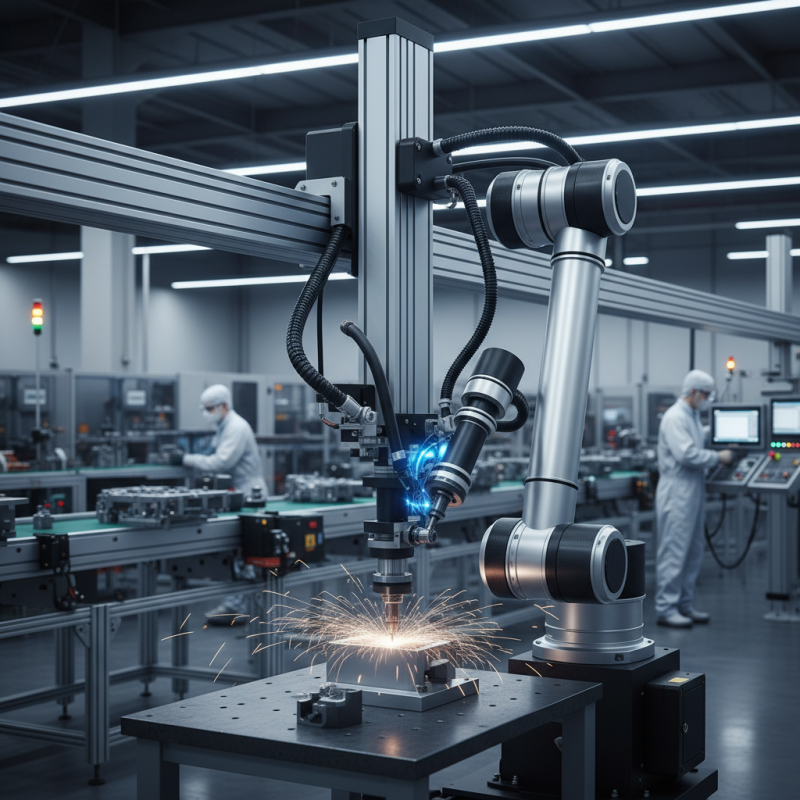
Benefits of Increased Precision in Manufacturing with 5 Axis Cartesian Robots
The adoption of 5-axis Cartesian robots in manufacturing brings numerous advantages, particularly in precision. These robots can operate on multiple angles and directions simultaneously. This capability allows for intricate designs that were previously unattainable. For example, complex machining processes can be completed in one go. This reduces the risk of discrepancies that often arise from multiple setups.
Precision is crucial in various industries. Car manufacturers, for instance, benefit from these robots during component assembly. High precision ensures that every part fits seamlessly. This leads to enhanced product quality and fewer defects. Lesser errors mean that time and resources are utilized more efficiently. However, it’s important to note that achieving maximum precision requires careful calibration and maintenance.
5-axis robots also facilitate automation. Automation reduces human error while increasing speed. This can be particularly beneficial for high-volume production runs. However, transitioning to automation can present challenges. Training staff to operate these advanced systems takes time. Manufacturers must balance the investment in technology with potential learning curves. Ensuring team members are well-versed in these systems will ultimately determine the success of their implementation.
Enhancement of Operational Efficiency and Productivity through Automation
Manufacturers are increasingly turning to 5 Axis Cartesian Robots for automation. These machines offer remarkable enhancement in operational efficiency. They provide precise movement across various axes, which allows them to perform complex machining tasks without manual intervention. By automating repetitive tasks, these robots reduce the risk of human error and enhance production speed.
Furthermore, integrating 5 Axis robots can lead to significant productivity gains. Not only do these robots operate at high speeds, but they also maintain consistent quality in production. This consistency is critical in industries where precision is paramount. However, implementing these systems may require substantial initial investment and thorough training. Companies must consider the potential challenges in maintenance and troubleshooting.
The shift to automation is not seamless. Workers may feel apprehensive about job security. Employers must address this concern by fostering a culture of collaboration between humans and robots. By doing so, manufacturers can create an environment where technology supplements human skills. Embracing these robots can ultimately lead to better resource allocation and optimized production processes.
Flexibility in Production Processes with 5 Axis Robot Applications
In today's manufacturing landscape, flexibility in production processes is paramount. 5 Axis Cartesian robots offer substantial advantages in various applications. These robots can maneuver along multiple axes, allowing for intricate tasks and versatility. A recent industry report indicated that the adoption of multi-axis robots can lead to a 30% reduction in cycle time. This speed enables manufacturers to respond swiftly to market demands.
The adaptability of 5 Axis robots proves crucial in complex environments. Whether it’s assembling components or performing CNC machining, these robots facilitate easy reconfiguration. This capability is vital as companies grapple with varying production needs. Furthermore, their ability to handle diverse materials enhances overall efficiency. For instance, manufacturing sectors report an increase in productivity by up to 20% when integrating advanced robotic systems.
However, it’s important to acknowledge the challenges. Initial setup costs can be high, which limits accessibility for some manufacturers. Training staff to operate these advanced machines is also necessary. These factors may require further evaluation. Despite these hurdles, the benefits often outweigh the drawbacks, providing a pathway to increased innovation in manufacturing processes.
Reduction of Material Waste and Cost Savings in Manufacturing Operations
5 Axis Cartesian robots have revolutionized manufacturing operations by significantly reducing material waste. These advanced robotic systems optimize material usage with precision cutting and 3D printing capabilities. According to a report by the International Federation of Robotics, companies using 5 axis machines can minimize waste by up to 30%.
Cost savings are evident as well. It is estimated that by reducing scrap material, manufacturers can save approximately 15% on average production costs. Moreover, the automation of repetitive tasks leads to higher efficiency and less human error. This aspect not only drives down material waste but also enhances productivity across various sectors.
However, the initial investment in 5 axis technology can be high. Manufacturers must weigh the long-term savings against upfront costs. Training employees on this technology is crucial, yet it requires time and resources. As the industry evolves, continuous evaluation of these systems is necessary to fully tap into their potential. Balancing immediate expenses with future gains is a reflective journey for many manufacturers venturing into this realm.
Benefits of 5 Axis Cartesian Robots in Manufacturing
Impact on Labor Dynamics and Job Training in Automated Manufacturing Environments
The rise of 5 Axis Cartesian robots is transforming labor dynamics in manufacturing. These robots can perform complex tasks with precision. This capability not only reduces errors but also enhances productivity. According to data from the International Federation of Robotics, the utilization of such advanced automation tools can increase production efficiency by up to 30%. As a result, manufacturers often find themselves needing fewer workers for repetitive tasks.
However, this shift has implications for job training. Existing workers may need new skills to operate sophisticated machinery. A report from Deloitte highlights that 63% of manufacturers face a skills gap in the workforce. Training programs that focus on robotics and automation are essential. Yet, companies sometimes struggle to implement these programs effectively. As manufacturers adopt advanced technologies, they must also consider how to retrain their workforce.
Moreover, while automation drives efficiency, it raises concerns about job displacement. It's essential to acknowledge that not all jobs can be replaced by robots. Human oversight remains critical, especially in quality control. Balancing automation with human skills presents a challenge. Manufacturers must reflect on how to integrate technology without losing the human touch that maintains their competitive edge.
Benefits of 5 Axis Cartesian Robots for Manufacturers
| Benefit | Impact on Labor Dynamics | Job Training Requirements |
| Increased Precision | Reduces the need for manual correction | Operators need to understand machine programming |
| Enhanced Efficiency | Less downtime and faster production cycles | Training in automation systems |
| Cost Savings | Lower labor costs over time | Upskilling of existing workers is essential |
| Flexible Production | Adapts easily to new product lines | Training on specific applications required |
| Improved Safety | Minimizes human error in hazardous tasks | Safety training must be integrated into programs |