
7 Tips for Choosing a Top Dense Load FIBC Exporter in China

Choosing a reliable FIBC exporter in China requires more than comparing prices and product photos. Dense load bags must withstand filling pressure, lifting stress, storage movement, and repeated handling. A dependable supplier should explain fabric strength, seam construction, coating options, safety factors, and tested load performance in clear language.

This guide introduces seven practical tips for identifying a China Top Dense Load Fibc Exporter. It focuses on evidence, not polished promises. Look for manufacturing experience, documented quality procedures, traceable raw materials, and consistent communication. Factory photographs can help, but they should not replace samples, inspection records, or direct technical answers. Ask how the exporter checks fabric weight, stitching, dimensions, and lifting loops before shipment.

Real purchasing experience often reveals small details. A sample may look strong but show uneven seams under close inspection. A delivery may arrive on time, yet labels or packing details may need improvement. These issues deserve honest discussion. No supplier is perfect. Reliability depends on how openly the company identifies problems and corrects them.

The following tips help buyers compare exporters with greater confidence. They consider production capability, customization support, testing practices, export coordination, and after-sales responsibility. A professional supplier should understand your cargo density, filling method, discharge design, and storage conditions. It should also recommend a suitable bag structure instead of simply accepting every specification. Careful questions protect both product performance and long-term cooperation. Small checks matter.
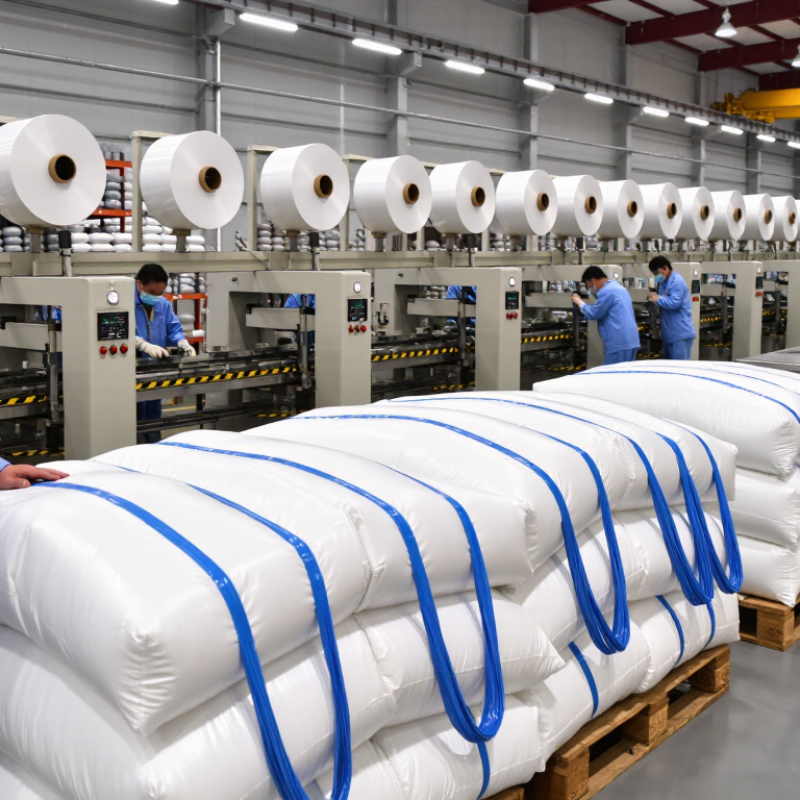
7 Tips for Choosing a Top Dense Load FIBC Exporter in China

Understanding Dense Load FIBC Specifications and Applications

Dense-load FIBCs are designed for heavy, compact materials such as minerals, powders, grains, and construction additives. Their specification must match both product density and handling conditions. ISO 21898 provides testing guidance for flexible intermediate bulk containers, including lifting, stacking, and drop performance. A high-quality exporter should provide traceable test records, not only a printed safety factor.

According to Grand View Research’s 2024 FIBC market analysis, the global market was valued at over USD 5 billion in 2023 and is expected to grow steadily through 2030. This growth reflects wider use in agriculture, chemicals, food ingredients, and industrial materials. For dense loads, check the safe working load, fabric strength, loop design, base construction, and filling height. A 5:1 safety factor may suit many reusable applications, while demanding cycles can require higher performance.

Small details matter. A liner can reduce moisture exposure and powder leakage, but it may increase filling pressure. Bottom discharge improves unloading speed, yet poor spout design can leave material trapped. Exporters should confirm pallet dimensions, container loading plans, and humidity controls before production. I have found that “standard size” often causes avoidable problems. It is not always standard. Independent factory audits, batch samples, and compression tests make supplier selection more reliable, although no test replaces careful field feedback.

Checking Exporter Experience, Manufacturing Capacity, and Certifications

7 Tips for Choosing a Top Dense Load FIBC Exporter in China

Experience should appear in records, not promises. Ask how many years the exporter has supplied dense load FIBCs. Request shipment histories, repeat-order rates, and samples from similar industries. Grand View Research’s 2024 market analysis indicates continued growth in global FIBC demand, making supplier consistency increasingly important. A factory serving international buyers should explain its inspection process clearly.

Tip 1: Check manufacturing capacity carefully.

Visit, or request a live video audit of, weaving, coating, sewing, and testing areas. Look for labeled raw materials, clean storage, and traceable production batches. Ask for monthly output, peak-season capacity, and average lead time. A large facility is not always efficient. That assumption can fail.

Tip 2: Verify certifications independently.

ISO 21898 defines important requirements for flexible intermediate bulk containers, including design and testing. Request current certificates, scope pages, and issuing-body details. Ask for tensile, seam-strength, toppling, and safe-working-load test reports. Intertek’s packaging testing guidance also stresses documented performance verification.

Tip 3: Compare certificates with the actual product.

The certificate may cover another factory or product range.

Tip 4: Confirm loading tests use the required safety factor.

Tip 5: Review corrective-action records after failed inspections.

Tip 6: Require pre-shipment inspection photos and batch numbers.

Tip 7: Keep one approved sample for comparison.

Small stitching changes matter.

Evaluating Material Quality, Safety Standards, and Product Customization

Choosing a top dense load FIBC exporter in China requires more than comparing prices. Material quality, safety testing, and customization often decide whether a bag performs well under pressure.

Tip one: Request the resin specification. Virgin polypropylene usually offers consistent strength and cleaner processing. Ask whether recycled content is included. It may affect performance. Tip two: Inspect fabric samples closely. Check weave uniformity, coating, stitching, and lifting loops. Uneven seams are warning signs. Tip three: Verify load testing. Reliable exporters should provide test records for safe working load, safety factor, drop resistance, and stacking performance. Do not accept vague certificates. Tip four: Review factory quality controls. Batch identification, raw material inspection, and final sampling show practical discipline. I have found that small documentation gaps can reveal larger production risks.

Tip five: Confirm applicable safety standards for your destination market. The exporter should explain testing methods, inspection frequency, and traceability clearly. Tip six: Discuss customization in measurable terms. Specify dimensions, inlet and outlet design, liner thickness, fabric weight, printing limits, and lifting configuration. A simple drawing prevents expensive misunderstandings. Tip seven: Order a pre-production sample. Test its filling, handling, and storage conditions before approving volume production. This step feels slow, but it can expose weak loops or unsuitable liners early. No exporter is perfect. What matters is transparent communication, evidence, and a willingness to correct mistakes.

7 Tips for Choosing a Top Dense Load FIBC Exporter in China

Evaluating material quality, safety standards, and product customization

How to use this chart: The capacities shown are commonly specified nominal safe working load options for bulk bags. Confirm the exact rated capacity, safety factor, lifting configuration, filling method, discharge design, and test documentation for every purchase order.

  1. Confirm the polypropylene fabric grade, coating, seam construction, and UV-treatment requirements.
  2. Match the bag’s safe working load to the product density, filling volume, and handling equipment.
  3. Request documented testing against applicable requirements, including ISO 21898 where relevant.
  4. Check electrostatic controls for combustible powders and specify the appropriate FIBC type.
  5. Review lifting loops, liners, inlet and outlet dimensions, and pallet compatibility.
  6. Verify customization through drawings, samples, inspection records, and lot traceability.
  7. Assess export packaging, container loading, inspection procedures, and after-sales support.

Comparing Pricing, Minimum Orders, Packaging, and Delivery Terms

7 Tips for Choosing a Top Dense Load FIBC Exporter in China

Comparing Pricing, Minimum Orders, Packaging, and Delivery Terms

A dependable exporter should explain pricing by fabric weight, bag size, coating, seams, and testing requirements. Do not compare two quotes by unit price alone. A 1,000-kg safe working load bag may need stronger fabric and reinforced lifting loops. Ask for a detailed quotation.

Minimum order quantity affects both cost and risk. Some factories accept a small trial order, while others require container-level volumes. Request a sample before production. Check its dimensions, stitching, loop strength, and discharge design.

I once trusted a low-cost sample too quickly. The final batch had inconsistent seams. That mistake taught me to approve a signed specification sheet.

Packaging should protect bags from moisture, dust, and compression. Ask whether units are folded, strapped, palletized, or wrapped individually. Confirm the number of bags per pallet and the pallet material. These details change warehouse handling costs.

Delivery terms also need precise wording. Compare EXW, FOB, CIF, and DDP quotations carefully. Clarify port charges, export documentation, insurance, and inland transport. A quoted lead time should include fabric preparation, printing, inspection, and loading. Request production photos and inspection records when practical. Reliable exporters communicate delays early, although no supplier can promise perfect schedules. Consider payment terms, replacement policies, and traceable quality records before committing to a larger order.

Assessing Communication, Quality Control, and After-Sales Support

7 Tips for Choosing a Top Dense Load FIBC Exporter in China

Clear communication is the first practical test. A reliable exporter should confirm fabric grade, safe working load, dimensions, liner needs, and lifting design in writing. Ask for a technical drawing before production begins. Small misunderstandings can change bag performance. Fast replies are helpful, but they do not prove competence. I still need precise answers, records, and realistic delivery dates. Request a named contact and an agreed response time for urgent questions.

Quality control should follow the bag through every stage. Check raw material records, fabric weight, seam strength, and loop construction. Ask whether the factory performs drop tests, dimensional checks, and load tests for each production batch. Independent inspection can add useful evidence. However, inspection reports deserve careful review. A photograph is not the same as a verified test result. Traceable batch numbers make problems easier to investigate. They also support consistent purchasing decisions.

After-sales support reveals an exporter’s real reliability. Confirm the complaint process before placing an order. The supplier should define response times, evidence requirements, corrective actions, and replacement terms. Ask for examples of root-cause reports, with confidential details removed. Good support should continue after payment and shipment. Delays can happen, and I sometimes underestimate how quickly site conditions change. That is why spare stock, clear packaging marks, and practical handling guidance matter. A supplier willing to discuss weaknesses may be more dependable than one promising perfection.

7 Tips for Choosing a Top Dense Load FIBC Exporter in China - Assessing Communication, Quality Control, and After-Sales Support

Tip Evaluation Dimension Weight Recommended Benchmark Evidence to Request Score
(1–5)
1 Confirm Dense-Load FIBC Capability 20% Demonstrated experience with the required safe working load, filling method, discharge design, dimensions, fabric specification, and safety factor. Technical drawings, product specification sheet, sample inspection report, and references for comparable applications. _____
2 Verify Quality Management 18% A documented quality system with controlled procedures for incoming materials, production, inspection, nonconformity handling, and traceability. ISO 9001 certification is a useful verification point. Current certificate scope, quality manual excerpts, inspection plan, calibration records, and corrective-action examples. _____
3 Check Compliance and Testing 17% The exporter should identify applicable requirements for FIBCs, including ISO 21898 where relevant, destination-market rules, product-contact requirements, and UN certification when transporting regulated dangerous goods. Test reports from recognized laboratories, certificate numbers, material declarations, and records showing the report matches the proposed construction. _____
4 Assess Communication Quality 12% A named contact provides clear answers, confirms technical details in writing, flags risks early, and maintains a documented change history. A practical target is a response within one business day for routine inquiries. Communication log, completed technical questionnaire, sample quotation, production schedule, and escalation contact details. _____
5 Review Production and Delivery Control 13% Stable lead-time planning, approved pre-production samples, lot identification, packaging controls, and inspection before shipment. Delivery dates should be confirmed against capacity and material availability. Manufacturing flow chart, capacity statement, production schedule, pre-shipment inspection report, packing list, and container-loading photographs. _____
6 Evaluate After-Sales Support 10% A written process exists for complaint registration, root-cause analysis, replacement or credit decisions, and corrective action. A practical target is an initial complaint acknowledgment within two business days. Warranty terms, complaint form, corrective-action report template, return policy, and anonymized case-resolution records. _____
7 Compare Commercial and Supply-Chain Transparency 10% The quotation clearly separates product cost, tooling or plate charges, testing, packaging, freight assumptions, payment terms, minimum order quantity, and lead time. Itemized quotation, Incoterms® 2020 reference, payment schedule, material-source declaration, and supply-risk contingency plan. _____
Total Weighted Score 100% Final Result: ____ / 5
Scoring Guide: 1 = Poor or unsupported; 2 = Weak evidence; 3 = Acceptable; 4 = Strong and verifiable; 5 = Excellent, documented, and consistently demonstrated. Suggested interpretation: 4.0–5.0 = preferred supplier, 3.0–3.9 = conditional approval, below 3.0 = further verification required.