Choosing the right valve begins with understanding the system, not browsing a product catalog. Every pipeline has different demands, including pressure, temperature, flow rate, fluid type, and operating frequency. These factors determine which types of valves can perform safely and reliably. A valve controlling clean water may fail quickly in a chemical process. A design suitable for low pressure may become dangerous under repeated pressure surges.
In practical applications, a stainless steel ball valve may provide quick isolation and dependable shutoff. A butterfly valve can save space on large pipelines, while a globe valve offers more precise flow control. Check valves help prevent reverse flow, but they still require correct sizing and installation. Small details matter. Thread standards, seal materials, maintenance access, and pressure ratings should never be treated as minor specifications. Reviewing manufacturer data, industry standards, and site conditions improves the decision. Experienced engineers also inspect the actual operating environment before making recommendations. A dusty plant, vibrating pump, or frequently cleaned food line can change the best choice.
There is no universal “best” valve. That conclusion sounds simple, but it is often ignored. Reliable selection requires comparing performance, service life, maintenance needs, and total cost. This guide explains how to evaluate types of valves for different applications. It also highlights common selection mistakes and practical questions worth asking before installation. Some choices remain uncertain without field testing. That is why careful verification matters.
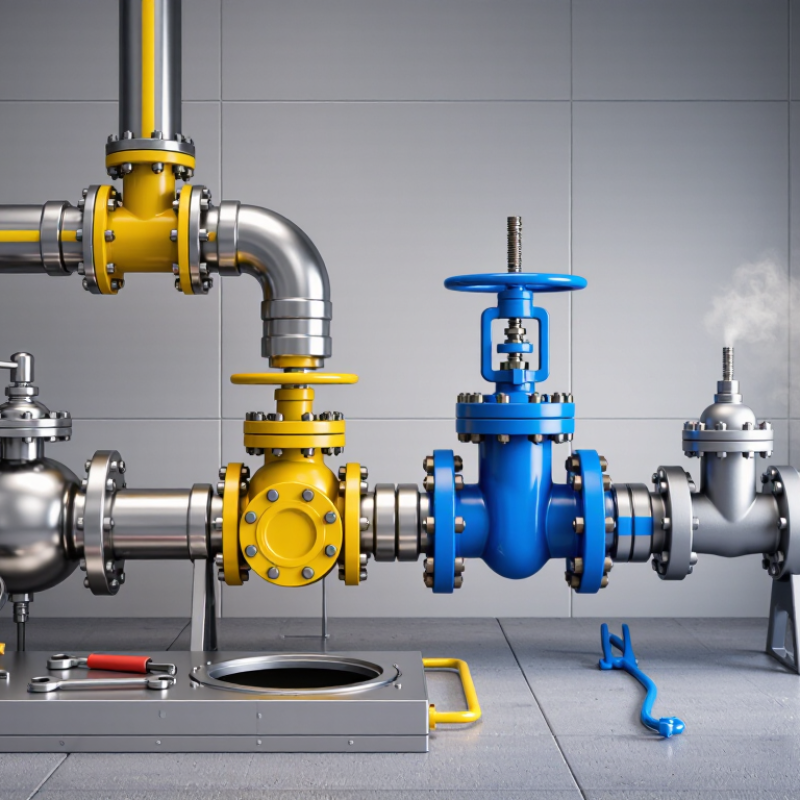
Choosing the right valve begins with understanding its basic function. A valve controls, directs, or stops fluid movement inside a system. Gate valves suit full open or full closed service. Globe valves provide more precise flow adjustment. Check valves prevent reverse flow without manual control. Butterfly and ball valves often offer quick shutoff with compact designs.
Every valve contains working parts with specific responsibilities. The body holds internal pressure. The seat creates a sealing surface. The disc, ball, or gate changes the passage. A stem transfers movement from the handle or actuator. Packing helps prevent leakage around the stem.
Operating principles matter too. A quarter-turn valve opens quickly, while a rising-stem design gives clearer position feedback. In field inspections, I check the medium, temperature, pressure, pipe size, and available space before selecting a valve. Small details matter. A valve that fits the pipe may still fail under heat, corrosion, or frequent cycling.
Tips: Confirm the required flow direction and pressure rating. Ask whether the valve will throttle or isolate. Check the actuator’s torque requirements. Inspect sealing materials for chemical compatibility. Leave room for maintenance access. I have learned that selection tables can simplify decisions, but they cannot replace site conditions. Flow data may also be incomplete, which makes an apparently perfect choice uncertain. When conditions are unclear, record assumptions and request verified operating data before installation.
How to Choose the Right Types of Valves for Your Needs?
Matching a valve to a system starts with service conditions, not catalog size. Record the fluid, temperature, pressure, flow range, and solids content. A hot oil line needs different materials than a chilled-water circuit. Corrosion can quietly shorten service life. Check it early.
Valve authority also depends on operating frequency and control accuracy. Isolation service may suit a ball or butterfly valve. Throttling service often demands a control valve with predictable flow characteristics. The U.S. Department of Energy reports that compressed-air leaks can waste 20–30% of compressor output. Poor valve selection can add to that loss through leakage, pressure drop, or unstable control. Small losses become expensive when equipment runs continuously.
Use verified data, not habit. Compare pressure ratings with the system’s maximum temperature and transient conditions. Review flow coefficients, actuator torque, seat materials, and maintenance access. ISO 5208 provides leakage-testing procedures for industrial valves, while ISA-75.01.01 supports control-valve flow calculations. These standards improve consistency, but they cannot replace field judgment. I have seen a technically correct valve fail because its actuator lacked enough closing torque after contamination. A spreadsheet may miss that detail. Ask how the valve will behave after months of cycling, vibration, and imperfect maintenance. Then confirm the final choice with test records and operating evidence.
Typical pressure-loss coefficients for common valve types in the fully open position. Lower values generally indicate lower resistance to flow.
Use gate and ball valves when low pressure loss and reliable shutoff are priorities. Globe valves provide better throttling control but usually create higher pressure loss. Actual values vary with valve size, trim, flow rate, and design.
Choosing a valve starts with the fluid, pressure, temperature, and required flow control. A ball valve suits clean liquids and gases when fast, tight shutoff matters. It operates quickly with a quarter turn. A gate valve works well for large pipelines that stay fully open or closed. It is a poor choice for continuous throttling, because partial opening can damage the gate and seat.
Butterfly valves fit large-diameter water, air, and low-pressure process lines. Their compact body can reduce installation space. Globe valves provide steadier flow adjustment, making them useful near pumps, heaters, and control points.
A check valve prevents reverse flow after a pump stops. Orientation still matters. A badly installed check valve may chatter or fail to close.
For precise low-flow adjustment, engineers often consider needle valves. Diaphragm valves can handle corrosive fluids or mixtures containing solids, depending on the lining and diaphragm material. Relief valves protect equipment from excessive pressure, but their set pressure requires careful verification.
I have seen valve selections fail because material compatibility was treated as an afterthought. Do not rely on pressure rating alone. Review fluid chemistry, temperature changes, maintenance access, actuator speed, and applicable safety standards. The best valve is not always the most expensive. It is the one that performs reliably in its actual service conditions.
Choosing a valve begins with the fluid, not the pipe size. Material compatibility matters because water, chemicals, steam, and abrasive slurries attack components differently. Stainless steel may suit many corrosive services, while lined or specialized alloys can perform better in harsher conditions. Check the body, seat, stem, and gasket materials separately. Small details matter.
Pressure and temperature ratings must match real operating conditions, including startup surges and shutdown cycles. A valve rated only slightly above normal pressure may fail when a pump starts suddenly. High temperature can also weaken seals and change clearances. Review both minimum and maximum temperatures. Do not rely on average readings.
Flow behavior deserves equal attention. A control valve should regulate smoothly at the expected flow range, while an isolation valve should create minimal resistance when fully open. Valve size should follow calculated flow requirements, not simply the existing pipe diameter. Oversizing often causes unstable control. Undersizing creates unnecessary pressure loss.
During practical selection, I would verify the fluid’s chemistry, viscosity, suspended particles, pressure, temperature, and required flow rate. I would also question incomplete data instead of filling gaps with assumptions. That step is easy to skip. It should not be. Independent test records, recognized standards, and maintenance history can improve confidence, but no document replaces checking actual site conditions. A valve may look correct on paper and still perform poorly after installation.
| Valve Type | Best Flow-Control Role | Typical Compatible Media | Common Body Materials | Typical Temperature Range | Typical Pressure Capability | Flow and Pressure-Drop Characteristics | Important Selection Considerations |
|---|---|---|---|---|---|---|---|
| Ball Valve | Fast isolation and on/off service | Water Air Gas Oil Many chemicals | Brass, bronze, stainless steel, carbon steel, engineered plastics | Approximately −40°C to 200°C, depending on body, seat, and seal materials | Often suitable for low to high industrial pressures; rating depends on design, size, material, and temperature | Full-port designs provide relatively low pressure loss; quarter-turn operation enables rapid shutoff | Choose seat and seal materials carefully. Standard ball valves are generally not preferred for continuous throttling because partially open service can damage seats |
| Butterfly Valve | Isolation and moderate throttling in large pipelines | Water Cooling water Air Low-pressure gas Slurries | Ductile iron, carbon steel, stainless steel, aluminum bronze, reinforced plastics | Approximately −40°C to 250°C; resilient seats usually have lower temperature limits than metal seats | Commonly used at low to medium pressures; high-performance and triple-offset designs can handle higher ratings | Compact and lightweight with relatively low pressure drop when fully open; disc remains in the flow path | Verify compatibility of the liner or seat with the process fluid. Not ideal where extremely tight throttling control is required |
| Gate Valve | Full-flow isolation, normally fully open or fully closed | Water Steam Hydrocarbons Process liquids | Cast iron, ductile iron, carbon steel, stainless steel, alloy steel | Approximately −29°C to 550°C or higher in specialized designs | Available across a broad range of pressure classes, including high-pressure applications | Very low pressure loss when fully open; slow operation and poor control performance when partially open | Use for isolation rather than routine throttling. Confirm stem, wedge, trim, and body materials for temperature and corrosion exposure |
| Globe Valve | Flow regulation, throttling, and isolation | Water Steam Gas Chemical liquids | Bronze, cast iron, carbon steel, stainless steel, alloy steel | Approximately −29°C to 550°C or higher, depending on construction and trim | Suitable for low to high pressures; pressure rating varies by body and end connection | Good throttling accuracy and controllability, but typically creates more pressure drop than a gate or full-port ball valve | Useful when precise flow adjustment is more important than minimum energy loss. Select trim characteristics according to the control requirement |
| Check Valve | Automatic prevention of reverse flow | Water Air Gas Steam Process fluids | Bronze, cast iron, carbon steel, stainless steel, engineered plastics | Approximately −40°C to 400°C, depending on type, seat, and material | Available for low, medium, and high pressure service; flow-direction and closing-pressure limits must be checked | Pressure drop depends on swing, lift, piston, or wafer design; sudden closure can cause water hammer | Size for stable operation at the minimum flow. Consider a non-slam design where reverse flow or surge could damage equipment |
| Diaphragm Valve | Clean isolation, corrosive service, and slurry handling | Corrosive liquids Slurries High-purity fluids Abrasive liquids | Lined metal, stainless steel, cast iron, thermoplastics, reinforced plastics | Approximately −20°C to 150°C; diaphragm material commonly limits the operating temperature | Generally used at low to medium pressures, with limitations determined by diaphragm size and material | Good shutoff and contamination control; flow path may create moderate pressure loss, especially in weir designs | Match the diaphragm to the fluid, temperature, pressure, and permeation requirements. Suitable for fluids that must not contact moving metal parts |
| Plug Valve | Quarter-turn isolation and selected throttling duties | Gas Oil Water Slurries Corrosive fluids | Cast iron, carbon steel, stainless steel, alloy steel, lined metal | Approximately −40°C to 260°C; specialized metal-seated designs may operate at higher temperatures | Suitable for low to high pressure depending on plug style, body, seal system, and end connection | Full-port versions offer relatively low pressure drop; lubricated and sleeved designs have different maintenance requirements | Consider operating torque, seal compatibility, solids content, and whether frequent cycling or tight shutoff is required |
| Safety Relief Valve | Overpressure protection rather than normal flow control | Steam Air Gas Liquids | Carbon steel, stainless steel, alloy steel, bronze | Application-specific; commonly from below 0°C to more than 500°C in suitable designs | Must be selected for the set pressure, relieving pressure, back pressure, and required flow capacity | Designed to open automatically at a defined pressure and discharge enough fluid to protect the equipment | Set pressure, certified capacity, discharge piping, back pressure, and maintenance requirements are critical. Never use it as a routine isolation valve |
Choosing a valve starts with the fluid, pressure, temperature, and required flow rate. A valve that fits the pipe may still fail in service. I have seen teams choose by diameter alone. That shortcut caused noisy operation and early seat damage. Check whether the medium is corrosive, abrasive, clean, or carrying solids. Confirm the valve’s pressure and temperature ratings against real operating conditions, not optimistic estimates. Consider control accuracy, shutoff needs, connection type, and available space. Simple choices matter.
Installation errors often appear months later. Keep the pipeline aligned before tightening bolts. Do not force a valve to correct poor pipe fit. Remove welding debris, scale, and packing material from the line. Follow the specified flow direction and leave enough clearance for inspection. Support heavy valves independently. A sagging pipe can load the body and distort the seals. I once overlooked access around a handwheel. Routine operation became awkward, and rushed adjustments followed. That was preventable.
Maintenance should match the valve’s duty cycle. Inspect leakage, unusual vibration, corrosion, and operating torque. Record dates, symptoms, and process conditions. Small changes can reveal seat wear before failure. Lubricate only where the procedure permits; excess lubricant can attract dust or contaminate the process. Never tighten packing blindly. It may hide damage and make the stem difficult to operate. Isolate pressure before servicing, then verify zero energy through approved procedures. Selection is not finished at purchase. Field feedback should challenge the original choice when conditions change.