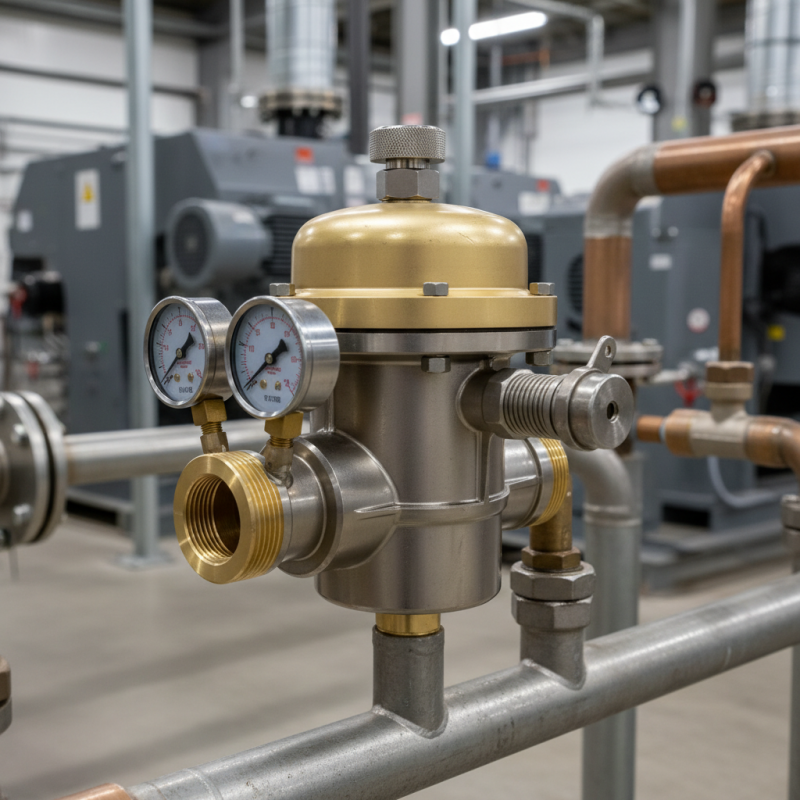
What is a Pressure Reducing Regulator and How Does It Work?
Pressure Reducing Regulators are essential devices in many industries. They maintain safe and consistent pressure levels in various systems. These regulators control the flow of gases and liquids, preventing pressure buildup that can cause accidents.
In homes and businesses, Pressure Reducing Regulators are common in gas lines. They ensure that the gas pressure is at a safe level before reaching appliances. A malfunction could lead to dangerous situations. It’s crucial to regularly check and maintain these devices.
Understanding how Pressure Reducing Regulators work can help users avoid issues. They often feature adjustable mechanisms to set desired pressure levels. However, not all users know how to operate them correctly. This lack of knowledge can lead to improper usage and risks. A simple guide on their function can promote safer environments.
What is a Pressure Reducing Regulator?
A pressure reducing regulator is a crucial device in many systems. It controls and reduces the pressure of a fluid, ensuring safety and efficiency. This regulator allows high-pressure gas or liquid to flow at a lower, manageable pressure. It's common in gas supply systems and hydraulic applications.
In simple terms, the device works by using a spring-loaded mechanism. As the fluid enters, it pushes against a diaphragm. This diaphragm regulates the flow by adjusting the valve position. The design often appears straightforward, but it requires precision. There can be failures if not maintained properly. Small leaks or blockages can create problems, impacting the overall system.
Users sometimes overlook the importance of regular checks. A clogged inlet can reduce effectiveness, leading to inconsistent pressures. Observing pressure readings is essential. Neglecting proper maintenance could result in inefficient operations. A pressure regulator needs attention, just like any other mechanical component. It plays a vital role but isn't foolproof. The learning curve involves understanding its function deeply.
Key Components of a Pressure Reducing Regulator
A pressure reducing regulator (PRR) is essential for controlling gas or liquid pressure in various applications. Its design uses several key components to maintain stable pressure levels. One crucial element is the diaphragm. This flexible membrane responds to changes in pressure. It helps ensure that the output pressure remains consistent, even when input pressure fluctuates.
Another important part is the adjusting spring. It exerts force on the diaphragm. This tension is adjustable, allowing users to set the desired output pressure. When the pressure rises too high, the diaphragm moves. This movement, in turn, compresses the spring and decreases the flow. Balancing these forces is delicate. A miscalibrated spring can lead to pressure spikes or drops.
Additionally, there is often a sensing port. This feature monitors the output pressure. It plays a key role in feedback loops. If the pressure is off, the regulator responds quickly. It’s not uncommon for users to overlook maintenance. A dirty or blocked regulator can cause erratic performance. Regular checks are vital to ensure safe and reliable operation.
What is a Pressure Reducing Regulator and How Does It Work? - Key Components of a Pressure Reducing Regulator
| Component | Description | Function |
| Inlet Pressure Port | Entry point for the high pressure fluid | Allows the high-pressure fluid to enter the regulator |
| Diaphragm | Thin flexible membrane that responds to pressure changes | Regulates the opening and closing of the valve |
| Adjustment Screw | Used to set the desired outlet pressure | Allows for manual adjustments to the output pressure |
| Outlet Pressure Port | Exit point for the regulated fluid | Delivers the reduced pressure fluid to the system |
| Spring | Provides resistance against the diaphragm movement | Controls the force acting on the diaphragm |
| Body | Main structure of the regulator | Houses all the components and fluid flow |
How Pressure Reducing Regulators Function
A pressure reducing regulator is vital in various industrial and residential settings. It regulates the pressure of gas or liquid, ensuring safety and efficiency. Understanding how these regulators function can significantly impact your operations.
Pressure reducing regulators work by controlling the flow of the medium through a valve. When the input pressure exceeds the desired output pressure, the regulator adjusts. This is often achieved by a diaphragm or a spring mechanism. The diaphragm moves in response to pressure changes, allowing or restricting flow. The result is a steady output pressure, regardless of input variations.
Tips: Regular maintenance is crucial for effective function. Dirty filters can hinder performance. Cleaning helps maintain optimal operation. Also, ensure the regulator is appropriately sized for your application. A mismatch can lead to inefficiencies or hazards.
Another aspect to consider is the environment of installation. Extreme temperatures can affect the regulator's efficiency. If exposed to such conditions, insulation might be necessary. Pay attention to these factors, or you might face unexpected issues.
Pressure Reducing Regulator Efficiency by Type
Applications of Pressure Reducing Regulators
Pressure reducing regulators (PRRs) are essential in various sectors. They ensure that systems operate safely and efficiently. One key application is in the natural gas industry. According to the American Gas Association, about 90% of U.S. homes use natural gas. PRRs maintain appropriate pressures to prevent leaks and equipment damage. This reliability is crucial for consumer safety and infrastructure longevity.
Another significant use is in medical facilities. Hospitals rely on PRRs to manage gases such as oxygen and nitrous oxide. Precise control of gas pressure is vital. A report by the National Institute of Health indicates that incorrect gas pressures can lead to severe health risks. PRRs help mitigate these risks by providing stable, safe pressure levels.
Industries also utilize PRRs for hydraulic systems. These systems operate under high pressures. A study from the International Society for Automation revealed that improper pressure regulation could lead to system failures. Monitoring and regulating pressure not only avoids accidents but also contributes to overall productivity. However, some facilities overlook the importance of regular maintenance and inspection, risking costly downtimes.
Maintenance and Troubleshooting of Pressure Reducing Regulators
Pressure reducing regulators are crucial for managing fluid or gas pressure in various systems. They ensure the pressure stays within safe limits. Regular maintenance is key to their effective operation. However, many users overlook this aspect, leading to issues like leaks or malfunctions.
Tips: Check for leaks regularly. A simple visual inspection can save you from big problems later.
Common problems include rising pressure or erratic performance. These issues often arise from dirt or blockages in the regulator. Cleaning the regulator and its components is essential. Filters should be cleaned or replaced frequently to ensure smooth operation.
Tips: Use clean tools and gloves while servicing. This avoids adding dirt to the system.
If you notice unusual noises or fluctuations, don’t ignore them. It could indicate a deeper issue within the system. Troubleshooting could require professional help, so understanding basic functions can be beneficial.
Tips: Regularly monitor pressure gauges. This ensures you catch problems early.