Top 10 Ball Valve Manufacturers for Global Buyers?

Choosing a ball valve manufacturer is not a catalogue exercise. A low purchase price can look attractive until delivery delays, inconsistent documentation, or unsuitable materials disrupt a project. Buyers need to compare engineering capability, product range, testing practices, certifications, and after-sales support.

Fortune Business Insights valued the global industrial valves market at USD 76.21 billion in 2023. Its market report covers multiple valve types, not ball valves alone, so the figure signals industry scale rather than ball-valve demand specifically. That distinction matters. Philip L. Skousen, author of Valve Handbook, emphasizes in his technical work the importance of matching valve selection to service conditions. Put plainly: the right valve depends on the job. A stainless-steel valve for a corrosive line and a carbon-steel valve for a general utility line may look similar online, but their specifications are not interchangeable.

This guide compares ten manufacturers for global buyers, focusing on verifiable product and company information rather than rankings built on unsupported claims. It considers pressure and temperature ranges, materials, end connections, and available quality documentation. Details matter. No single manufacturer is best for every application, and published specifications still require confirmation against the project’s actual conditions. This comparison is a starting point, not a substitute for engineering review.
Top 10 Ball Valve Manufacturers for Global Buyers?

What Ball Valves Do and Where They Are Used

A ball valve controls flow with a rotating, bored ball inside its body. A quarter-turn of the stem aligns the bore with the pipe or blocks it. The motion is quick. This simple operation makes ball valves useful where operators need reliable shutoff and straightforward control. Depending on their design and materials, they can handle water, compressed air, oils, and many industrial process fluids. No single valve suits every service.

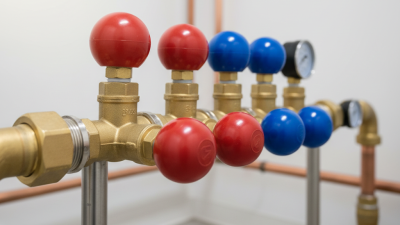
You may find them in building water lines, pump stations, manufacturing equipment, and utility piping. Picture a maintenance worker isolating a pump before replacing a seal: a clearly marked handle and accessible valve can make that task easier.

Fit matters. Before choosing a valve, check the fluid, operating pressure and temperature, connection type, and seat compatibility. A standard on-off ball valve may not perform well under continuous throttling; partial opening can increase wear or cause unstable flow.

Even a familiar application deserves a careful review, because fluid additives and temperature swings can change material requirements. In practice, installation space and maintenance access are easy to overlook, and they matter when a valve needs inspection or replacement.

How to Evaluate Ball Valve Manufacturers for Global Supply

Top 10 Ball Valve Manufacturers for Global Buyers?

How to Evaluate Ball Valve Manufacturers for Global Supply

Choosing a ball valve manufacturer means checking more than price and catalogue range. Match the valve’s body material, pressure class, seat, and end connections to the actual service conditions. Request traceable material certificates, dimensional drawings, and pressure-test records. For critical applications, confirm the stated test standard and ask whether testing can be witnessed. That matters.

Supply reliability also deserves evidence. McKinsey’s 2020 global supply-chain survey reported that 93% of respondents planned to increase supply-chain resilience. For buyers, that points to practical questions: Does the supplier qualify backup material sources? Can it share realistic lead times and production capacity? Are replacement parts available from more than one location? The World Bank’s 2023 Logistics Performance Index assessed 139 economies across areas including customs, infrastructure, tracking, and timeliness. Use those measures to understand shipping risks around a supplier’s production site, not as a substitute for factory audits.

Inspect quality controls in person or through an independent auditor when feasible. Review sample inspection plans, nonconformance records, and corrective-action responses. Ask how the manufacturer controls changes to materials or subcontracted processes. A polished certificate is useful, but it cannot show how a factory handles a failed test on a busy production day. I would verify that detail before placing a large order.

Top 10 Ball Valve Manufacturers for Global Buyers

Top 10 Ball Valve Manufacturers for Global Buyers

A useful top-ten shortlist should compare more than price and catalogue size. Buyers need to match valve design, body material, seat type, pressure range, and operating temperature to the actual service conditions. Ask for drawings and test records for the exact model being quoted. A sample certificate for a different valve is not enough. Small details count.

Check whether the supplier makes the valves or mainly resells them. A factory visit, live production video, or independent inspection can help verify machining and assembly capacity. Ask how each valve is pressure-tested, how batches are traced, and what happens when a test fails. That matters. Clear answers are more valuable than broad claims about quality. Delivery promises deserve the same scrutiny; confirm production time, packaging, and spare-part availability in writing.

Global buyers should also check communication after the order is placed. Can the technical team review a line specification, or does every question pass through sales? Request a sample quotation with material grades, connection dimensions, inspection scope, and shipping terms stated plainly. Compare the same requirements across all ten candidates. A polished brochure can still leave gaps, and buyers sometimes overlook that until installation. A short technical review before purchase can prevent costly mismatches.

How Leading Manufacturers Differ in Products and Capabilities

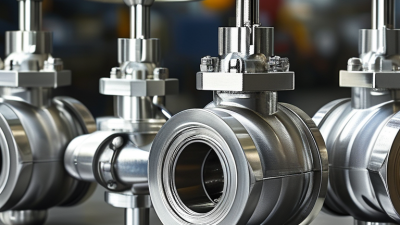
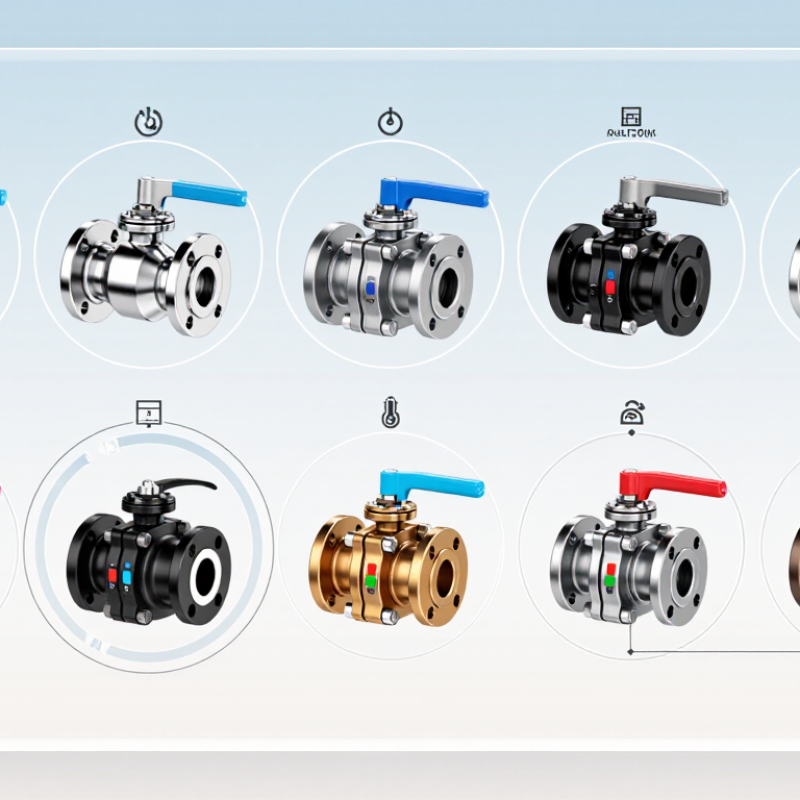
Ball valve manufacturers differ less by catalog size than by how well their designs match a buyer’s operating conditions. Some focus on compact floating-ball valves for moderate pressures, while others produce trunnion-mounted designs for larger pipelines and higher loads. Body materials, seat compounds, bore size, and end connections all affect performance. A stainless-steel valve may suit a corrosive washdown area, while a carbon-steel body may be specified for a different service. Details matter.

Manufacturing capability is another dividing line. Buyers should check whether a supplier can provide traceable material records, documented pressure tests, and consistent inspection procedures. Ask how the company handles custom dimensions, actuator mounting, and replacement parts. A polished brochure is not enough. Technical support counts. Lead times can vary when special alloys or unusual face-to-face dimensions are required, so confirm these before finalizing a project schedule. One detail is easy to miss: a valve that passes a factory test may still need the right seat and seal materials for the actual fluid and temperature. Compare drawings and test records, not just headline pressure ratings. Even experienced teams sometimes overlook that mismatch.

How to Choose and Verify a Ball Valve Supplier

Choosing a ball valve supplier starts with the service conditions, not a glossy catalogue. Record the medium, pressure, temperature, cycle frequency, end connections, and required seat material. A valve for clean water may fail quickly in abrasive slurry. Ask for pressure-temperature ratings, material certificates, dimensional drawings, and documented shell and seat test results. Check that the records match the exact model and production batch. Paperwork can look convincing. It is not proof by itself.

Grand View Research estimated the global industrial valves market at USD 78.9 billion in 2023, with projected growth of 4.3% annually from 2024 to 2030. That scale makes supplier verification practical, not optional. Request a sample inspection plan, traceability records, and a clear warranty process. For critical service, arrange an independent factory audit or witness testing against the purchase specification. Confirm the supplier can explain failure handling and spare-part lead times in writing. I would still question a perfect-looking certificate pack if heat numbers, test dates, or valve tags do not line up. Small mismatches matter. A short video call from the factory floor can expose gaps, but it cannot replace controlled inspection.

Top 10 Ball Valve Manufacturers for Global Buyers? - How to Choose and Verify a Ball Valve Supplier
A practical, brand-neutral checklist for evaluating manufacturers and verifying whether their products and documentation match your application.
No. Evaluation Area What to Check Evidence to Request or Verify
1 Application and product scope Confirm valve type, size, pressure class, end connections, operating conditions, and intended service. A product datasheet and a written confirmation that the proposed configuration meets the purchase specification.
2 Applicable design standards Check that the stated standard fits the valve type and service. Examples include API 608 or ISO 17292 for relevant metal ball valves, and API 6D for applicable pipeline valves. The standard edition, product scope, and design documentation; verify any claimed compliance against the project specification.
3 Pressure-temperature ratings Ensure the valve’s pressure-temperature limits and materials suit the operating and design conditions. ASME B16.34 is one standard that addresses valve ratings and related requirements. Published rating tables and a configuration-specific datasheet, including the body material and applicable temperature limits.
4 Materials and traceability Check body, trim, ball, stem, and seat materials against the fluid, temperature, corrosion risks, and project requirements. Material test certificates, heat or batch identification, and a documented link between supplied components and their records.
5 Inspection and pressure testing Confirm the inspection and test requirements, acceptance criteria, and test coverage specified for the order. ISO 5208 and API 598 are examples of industrial-valve testing standards; applicability depends on the valve and specification. A sample inspection and test plan, test procedure, and completed test report identifying the valve and results.
6 Quality management system Review how the manufacturer controls purchasing, production, inspection, nonconformities, and document revisions. ISO 9001 concerns a quality management system; it does not by itself certify an individual valve. A current certificate, its scope and issuing body, plus a check that the certified site is the site producing the ordered goods.
7 Special-service suitability For sour environments, assess material selection and qualification against the project requirements; ISO 15156 addresses materials for use in H₂S-containing environments in oil and gas production. A service-specific material list and supporting documentation showing the limits and conditions of the claimed suitability.
8 Regulatory and market requirements Identify destination-market obligations. For example, EU pressure equipment rules may apply depending on the equipment, pressure, fluid, and classification; explosive-atmosphere requirements apply only where relevant to the equipment and intended use. Applicable conformity documents and declarations, with scope and model details checked against the ordered product and destination.
9 Manufacturing capability and capacity Determine which processes are performed in-house or subcontracted, and whether the stated lead time covers production, inspection, and documentation. A process overview, production schedule, subcontractor controls, and—where practical—a live or independent facility audit.
10 Commercial, delivery, and after-sales support Clarify warranty terms, spare-parts availability, technical support, shipping responsibilities, and the process for handling claims. Written warranty and delivery terms, service contact details, spare-parts information, and references relevant to similar applications.
Note: Standards, certifications, and regulatory obligations are application- and market-dependent. Confirm the required editions, scope, and acceptance criteria in the project specification before purchase.