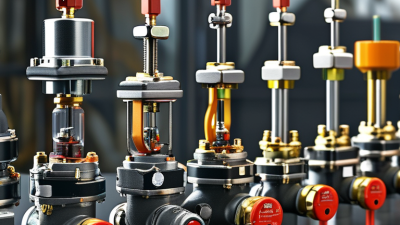
Top 10 Solenoid Valve Types for Global Buyers

Choosing the right solenoid valve can determine whether a fluid system runs quietly or fails during a critical cycle. Global buyers face many options, including direct-acting, pilot-operated, semi-direct, two-way, three-way, and proportional designs. Each type responds differently to pressure, temperature, flow rate, media, and installation conditions. Even 1 solenoid valve may influence an entire production line.

This guide examines the top 10 solenoid valve types from a practical purchasing perspective. It considers coil voltage, body materials, seal compatibility, response time, port size, maintenance access, and supplier documentation. Stainless steel may suit corrosive environments, while brass can offer a cost-effective choice for cleaner applications. Pressure changes. Details matter.

Reliable selection requires more than comparing prices or catalog photographs. Buyers should verify operating ranges, certifications, test records, warranty terms, and replacement-part availability. A supplier’s technical support also matters when valves operate in cold warehouses, humid factories, or dusty processing areas. Local standards can differ, so specifications should be checked before ordering internationally. A neat comparison can still mislead when real operating conditions are missing. Do not guess.

The following overview explains where each valve type performs well, where it may create limitations, and which questions deserve attention before purchase. It also acknowledges an uncomfortable truth: the cheapest valve is rarely the cheapest long-term solution. Careful matching reduces leakage, unexpected downtime, and repeated replacements while supporting safer, more dependable equipment design.
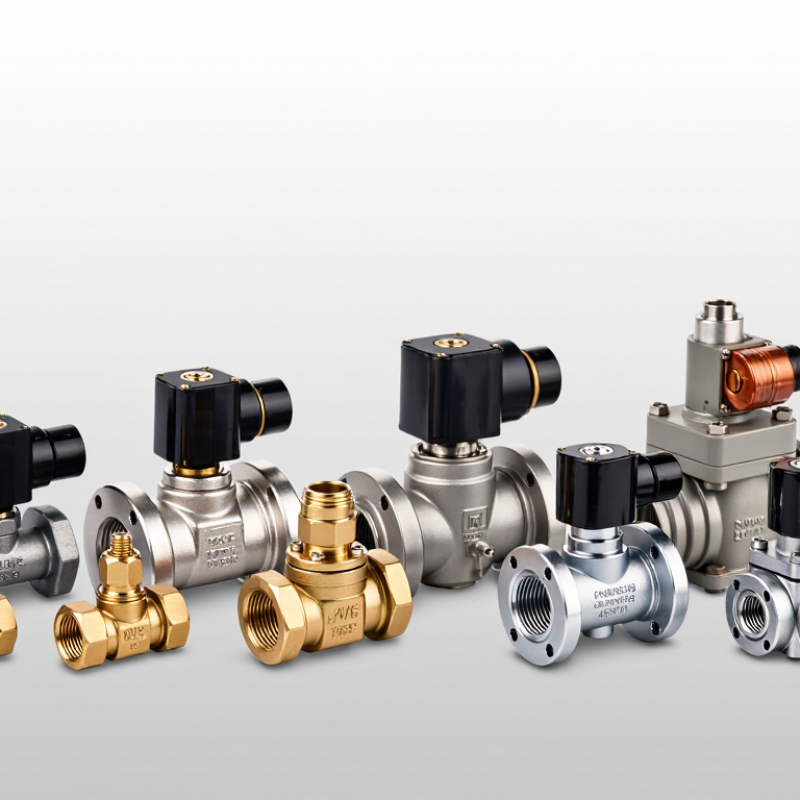
Top 10 Solenoid Valve Types for Global Buyers

What a Solenoid Valve Is and How Its Main Parts Work

A solenoid valve controls fluid or gas through electromagnetic force. It contains a valve body, coil, plunger, spring, seals, and one or more ports. The coil receives electrical power and creates a magnetic field. This field pulls the plunger upward or pushes it downward, depending on the design.

The plunger opens or closes an internal orifice. When power stops, the spring usually returns it to its resting position. This action creates normally closed or normally open operation. A direct-acting valve moves the plunger against line pressure. A pilot-operated valve uses pressure differences to control larger flows. Two-way valves have an inlet and outlet, while three-way versions switch flow between ports.

A useful inspection starts with the fluid, pressure range, temperature, voltage, and required flow rate. Check the seal material against the media. A small mismatch can cause swelling, leakage, or early failure. Dirt on the orifice is another frequent problem. Even a clean-looking pipe may carry rust particles. Install a suitable filter upstream when the system allows it.

Do not judge a valve by port size alone. Flow capacity, response time, pressure differential, and duty cycle also matter. I have seen specifications selected too quickly, especially when voltage was treated as an afterthought. That mistake deserves review. A warm coil may indicate normal operation, but excessive heat can signal incorrect voltage, continuous overuse, or poor ventilation.

Key Criteria for Comparing Solenoid Valve Types

Top 10 Solenoid Valve Types for Global Buyers

Comparing solenoid valve types requires more than counting ports or checking prices. The common options include 2/2-way, 3/2-way, direct-acting, pilot-operated, proportional, normally closed, and normally open designs.

Start with the medium. Water, compressed air, steam, oil, and corrosive fluids demand different sealing materials.

Then check pressure range, temperature, flow coefficient, response time, and allowable leakage. A valve may fit the pipe but fail under real operating cycles.

Electrical details matter equally. Confirm coil voltage, power consumption, duty cycle, connector protection, and enclosure rating.

IEC 60529 defines IP protection levels, but an IP rating does not prove chemical compatibility.

The U.S. Department of Energy reports that compressed-air leaks can waste 20–30% of compressor output.

Poor valve selection can add to that loss.

MarketsandMarkets’ 2024 solenoid valve market report forecasts continued global growth through 2029, reflecting wider automation demand, not automatic product quality. Market estimates also vary between reports. That deserves caution.

Tips:

Compare total lifecycle cost, not purchase price. Record pressure, temperature, switching frequency, and fluid data before requesting quotations.

Ask for tested flow and leakage results. A pilot-operated valve may save energy at higher flow, while direct-acting types can respond better at low pressure.

Normally closed valves often support safer shutdown behavior, but the correct fail position depends on the process.

I would also reserve space for manual override access. It is frequently overlooked.

Then review maintenance access, spare-coil availability, certification needs, and installation orientation. A neat specification sheet can still hide a poor field decision.

The Top 10 Solenoid Valve Types and Their Operating Principles

Top 10 Solenoid Valve Types for Global Buyers

The Top 10 Solenoid Valve Types and Their Operating Principles

Solenoid valves use an energized coil to move a magnetic plunger. The plunger opens, closes, or redirects fluid flow. Direct-acting valves move the plunger against pressure and work reliably at low flow rates. Pilot-operated valves use line pressure to move the diaphragm, making them suitable for larger ports. Semi-direct valves combine both methods and can operate with low differential pressure.

Normally closed valves open when energized, while normally open valves close when powered. Two-way valves control one inlet and one outlet. Three-way valves switch flow between ports, often for pneumatic actuators. Four-way valves alternate pressure and exhaust paths in double-acting cylinders. Proportional solenoid valves adjust flow according to electrical input, rather than simply switching on or off. Latching valves change position with a short electrical pulse and retain it without continuous power. These categories can overlap. The classification is useful, but not perfectly tidy.

Tips: Check pressure range, fluid temperature, seal compatibility, response time, and voltage before selection. Measure actual flow demand, not only pipe size. A valve may fit physically but perform poorly under unstable pressure. In field testing, contamination remains an overlooked cause of sticking. Install filtration where the fluid condition justifies it. Also verify whether failure should leave the valve open or closed; this decision affects safety and maintenance.

Choosing the Right Solenoid Valve for Different Global Applications

Top 10 Solenoid Valve Types for Global Buyers

Choosing the Right Solenoid Valve for Different Global Applications

Selecting a solenoid valve starts with the medium, pressure, temperature, and duty cycle. Water systems often need corrosion-resistant bodies and reliable sealing materials. The WHO/UNICEF Joint Monitoring Programme reported that 2.2 billion people lacked safely managed drinking water in 2022. That gap makes dependable flow control more than an engineering preference.

For HVAC projects, normally closed valves can reduce unwanted flow during power loss. The International Energy Agency states that buildings consume about 30% of global final energy. Therefore, correctly sized valves can support better heating and cooling control. Pneumatic equipment may require direct-acting or pilot-operated designs, depending on pressure and response speed. Small medical devices usually favor compact valves with clean internal passages. Food-processing systems need hygienic construction and frequent cleaning tolerance.

Check the details. Valve size alone proves little. Confirm voltage, seal compatibility, allowable leakage, and local electrical requirements. IEC 60529 ingress ratings help compare enclosure protection across markets. Hazardous locations require certified equipment, not improvised protection. Corrosion wins.

A common purchasing mistake is choosing the cheapest valve for every application. That approach ignores water quality, switching frequency, and replacement access. I would also question catalog flow data measured under ideal conditions. Real installations contain voltage drops, dirty filters, pressure variation, and imperfect maintenance. The best choice is the valve that remains predictable when conditions become ordinary.

Top 10 Solenoid Valve Types for Global Buyers - Choosing the Right Solenoid Valve for Different Global Applications
Rank Solenoid Valve Type Operating Principle Typical Port Sizes Typical Pressure Range Typical Temperature Range Common Global Applications Main Advantages Important Selection Considerations
1 2/2-Way Direct-Acting Valve Directly opens or closes one flow path using the solenoid plunger. 1/8 to 1/2 inch 0 to 10 bar
(0 to 145 psi)
Approximately -10 to 100°C
(14 to 212°F)
Water dispensing, laboratory equipment, pneumatic controls, small machinery, and general-purpose fluid isolation. Works at zero differential pressure; compact construction; fast response; suitable for low-flow service. Select according to fluid compatibility, orifice size, coil voltage, duty cycle, and required flow rate. It is less suitable for high-flow applications.
2 2/2-Way Pilot-Operated Valve Uses line pressure to assist the diaphragm or piston in opening and closing. 1/4 to 4 inches Approximately 0.3 to 25 bar
(4.4 to 363 psi)
Approximately -10 to 140°C
(14 to 284°F)
Water treatment, irrigation, process lines, compressed air, HVAC systems, and industrial utilities. Higher flow capacity; lower electrical power demand; available in larger connection sizes. Requires a minimum pressure differential for reliable operation. Avoid use where inlet pressure may fall below the valve's minimum operating pressure.
3 Semi-Direct-Lift Valve The solenoid plunger mechanically assists the diaphragm while pressure also supports operation. 1/8 to 1 inch 0 to 16 bar
(0 to 232 psi)
Approximately -10 to 120°C
(14 to 248°F)
Air compressors, water systems, process automation, and applications with fluctuating pressure. Can operate at near-zero differential pressure while providing greater flow than many direct-acting designs. Check the manufacturer's minimum and maximum pressure limits, diaphragm material, and allowable media before specifying for mixed-pressure systems.
4 3/2-Way Solenoid Valve Controls three ports and two switching positions for diverting, exhausting, or supplying a circuit. 1/8 to 1/2 inch Approximately 0 to 10 bar
(0 to 145 psi)
Approximately -10 to 80°C
(14 to 176°F)
Single-acting pneumatic cylinders, actuator control, vacuum systems, dosing equipment, and air logic circuits. Combines supply, exhaust, and switching functions in one compact valve. Specify the correct normally open, normally closed, or universal configuration. Port identification and flow direction must match the pneumatic circuit.
5 4/2-Way Solenoid Valve Uses four ports and two positions to direct fluid to opposite sides of a double-acting actuator. 1/8 to 1/2 inch Approximately 2 to 10 bar
(29 to 145 psi) for pneumatic service
Approximately -10 to 80°C
(14 to 176°F)
Double-acting pneumatic cylinders, industrial automation, material handling, and machine tools. Provides straightforward forward-and-return actuator control with a relatively simple circuit. Confirm the required return method, such as spring return or double solenoid, along with the flow coefficient and porting standard.
6 5/2-Way Solenoid Valve Controls five ports and two positions to power and exhaust a double-acting pneumatic actuator. 1/8 to 1/2 inch Approximately 2 to 10 bar
(29 to 145 psi)
Approximately -10 to 80°C
(14 to 176°F)
Factory automation, packaging machinery, robotics, assembly lines, and pneumatic production systems. Efficient actuator control; flexible exhaust arrangements; widely used in automated pneumatic systems. Choose between single-solenoid spring return and double-solenoid memory operation. Consider switching frequency, response time, and exhaust noise.
7 Normally Closed Valve Remains closed when the coil is de-energized and opens when electrical power is applied. 1/8 to 4 inches Depends on construction; commonly 0 to 25 bar
(0 to 363 psi)
Depends on seal and body materials; commonly -10 to 140°C
(14 to 284°F)
Fuel shutoff, water control, gas safety circuits, refrigeration, medical equipment, and emergency isolation. Provides a fail-closed configuration that helps stop flow during power loss. Verify that the closed position is the safest condition for the application. Assess coil heating, electrical backup, leakage limits, and local safety requirements.
8 Normally Open Valve Remains open when the coil is de-energized and closes when electrical power is applied. 1/8 to 2 inches Depends on construction; commonly 0 to 16 bar
(0 to 232 psi)
Depends on seal and body materials; commonly -10 to 120°C
(14 to 248°F)
Cooling circuits, ventilation systems, safety-release functions, purge lines, and applications requiring flow during power loss. Maintains flow without electrical power; useful where interruption of the medium could create a risk. Confirm that a fail-open response is appropriate. Consider energy consumption, heat generation, and the effect of continuous energization on service life.
9 High-Pressure Solenoid Valve Uses reinforced body, sealing, and actuation components to control fluids at elevated pressure. 1/8 to 1 inch Approximately 25 to 500 bar
(363 to 7,250 psi), application-dependent
Approximately -20 to 150°C
(-4 to 302°F), material-dependent
Hydraulic power units, pressure testing, gas handling, water-jet systems, industrial cleaning, and energy equipment. Designed for high-pressure containment and controlled isolation. Pressure rating must cover both steady-state and transient conditions. Confirm media compressibility, body material, seal compatibility, and required safety factor.
10 High-Temperature Solenoid Valve Uses heat-resistant body, coil, insulation, and sealing materials for elevated-temperature media. 1/8 to 2 inches Approximately 0 to 16 bar
(0 to 232 psi), application-dependent
Approximately 150 to 300°C
(302 to 572°F), design-dependent
Steam service, hot water, ovens, industrial dryers, sterilization equipment, and thermal process systems. Maintains reliable switching in hot-fluid environments when correctly specified. Check maximum media and ambient temperatures separately. Use suitable seal materials, thermal shielding, and a coil rated for the installation environment.

Note: Pressure, temperature, port-size, and flow capabilities are typical industry ranges and vary by valve design, body material, seal material, media, electrical configuration, and applicable regional standards. Always verify the final rating from the product technical documentation.

Installation, Maintenance, and International Purchasing Considerations

For global buyers, the ten main solenoid valve types require more than a catalog comparison. Selection starts at the pipe, not the product page. Confirm media, pressure range, temperature, flow direction, and cycle frequency.

Direct-acting valves suit low-flow applications. Pilot-operated designs need a minimum pressure differential.

Installation also matters. Keep tubing clean, follow the flow arrow, and protect the coil from heat and water. The U.S. Department of Energy reports that compressed-air leaks can waste 20–30% of system output. A small seal failure can become a large operating cost.

Maintenance should include leak checks, coil-temperature inspection, connector testing, and filter cleaning. Use a documented service interval, but do not trust the calendar alone. Heavy cycling may shorten seal life.

Electric motor systems consume roughly 50% of global electricity, according to the International Energy Agency. Efficient valve control supports wider energy goals, even when the valve itself uses little power.

International purchasing adds practical risks. Verify voltage, frequency, port thread, ingress protection, material certificates, spare-part availability, and customs documentation. Regional thread standards can create an expensive mismatch. A perfect specification can still fail during commissioning.

Tips: Request a sample installation drawing and test report before ordering. Confirm the coil voltage on the nameplate. Compare pressure loss at real flow rates. I would treat the first shipment as a pilot batch, not a final success. Record failures honestly. That information often improves the next specification.