
China Top 10 Vacuum Valve Manufacturers for Global Buyers?
Choosing a vacuum valve manufacturer in China requires more than comparing catalog prices. Global buyers must examine sealing performance, material quality, cycle life, delivery control, and technical support. A reliable vacuum valve should maintain stable pressure under demanding conditions. It should also match the chamber design, pumping system, media, temperature, and operating frequency.
This guide introduces ten Chinese manufacturers serving international equipment builders, research laboratories, semiconductor suppliers, coating facilities, and industrial vacuum users. The selection considers manufacturing experience, product range, export capability, quality systems, customization practices, and after-sales responsiveness. Practical details matter. Buyers should ask about leak-test methods, flange standards, actuator options, spare-part availability, and inspection records before placing an order.
No ranking is perfect. Supplier strengths can change with production capacity, engineering teams, and regional service arrangements. Some companies may excel at high-volume standard valves, while others perform better with engineered solutions or small custom batches. That difference is easy to miss.
A careful buyer should verify current certifications, sample performance, factory communication, and references from comparable applications. Product photographs alone are not enough. A polished website cannot replace test data, clear drawings, and consistent answers from technical staff. This overview is designed as a practical starting point, not a substitute for due diligence. It highlights manufacturers worth investigating and the questions that can reveal their real capabilities. Expect useful comparisons, but leave room for independent testing and a second opinion.
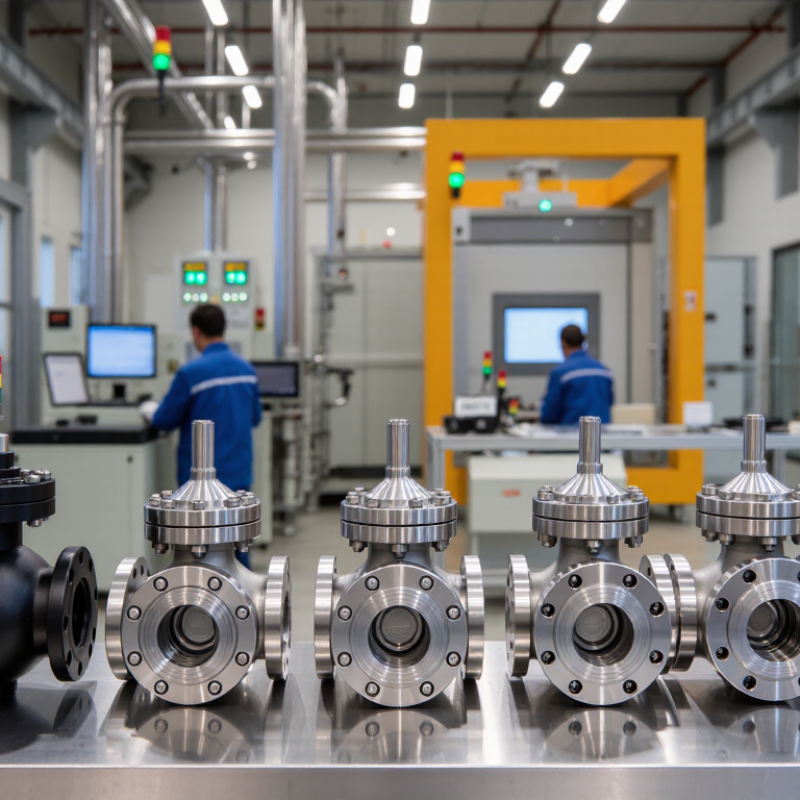
Vacuum Valve Basics and Their Role in Industrial Systems
China Top 10 Vacuum Valve Manufacturers for Global Buyers?
Vacuum Valve Basics and Their Role in Industrial Systems
A vacuum valve controls gas flow inside a low-pressure system. It isolates chambers, adjusts conductance, and protects sensitive process zones. Common designs include gate, butterfly, angle, and diaphragm valves. Each suits different pressure ranges, response times, and contamination risks. A gate valve may separate a deposition chamber, while a butterfly valve regulates rough-vacuum airflow. Small leaks matter. Even a tiny seal defect can extend pump-down time and disturb process stability.
Industrial performance depends on more than the advertised ultimate pressure. Engineers should examine leak rate, cycle life, actuation speed, materials, and cleanability. ISO 14644-1 limits particle concentration in controlled environments, with ISO Class 1 allowing only 10 particles per cubic metre at 0.1 micrometres. That figure shows why surface finish and seal selection matter. It is not merely a catalog detail.
Demand is linked to semiconductor, coating, research, and heat-treatment equipment. SEMI’s 2024 World Fab Forecast projected global semiconductor fabrication equipment investment above 100 billion U.S. dollars for 2025. This expansion increases demand for reliable isolation components. However, market growth does not guarantee correct selection. A valve rated for vacuum may still fail under frequent thermal cycling or corrosive chemistry. Engineers sometimes overlook maintenance access. That mistake becomes expensive. Practical testing, documented materials, and traceable quality records provide stronger assurance than low purchase price alone.
China Top 10 Vacuum Valve Manufacturers for Global Buyers? - Vacuum Valve Basics and Their Role in Industrial Systems
| No. | Vacuum Valve Type | Primary Role in a Vacuum System | Typical Operating Range | Common Actuation | Common Construction Materials | Typical Industrial Applications | Key Evaluation Points for Global Buyers |
|---|---|---|---|---|---|---|---|
| 1 | Vacuum Gate Valve | Provides low-leakage isolation between chambers, pumps, and process zones with a large, unobstructed flow path. | Atmospheric pressure to approximately 10-9 mbar, depending on seal design. | Pneumatic, electric, or manual | 304 or 316 stainless steel, aluminum, elastomer or metal seals | Semiconductor tools, thin-film coating, research vacuum chambers, and large transfer systems | Check flange standard, clear aperture, cycle life, closing speed, leak rate, and seal replacement procedure. |
| 2 | Vacuum Angle Valve | Isolates or connects vacuum lines arranged at a 90-degree angle while maintaining compact equipment layout. | Atmospheric pressure to approximately 10-9 mbar for suitable high-vacuum designs. | Pneumatic or manual | Stainless steel, aluminum, fluoropolymer components, elastomer seals | Pumping lines, load locks, analytical instruments, and laboratory vacuum equipment | Confirm conductance, port orientation, bakeout capability, actuator position, and maximum differential pressure. |
| 3 | Vacuum Butterfly Valve | Offers economical isolation or rough flow control through a rotating disc with a short operating stroke. | Atmospheric pressure to approximately 10-3 mbar for common elastomer-sealed designs. | Manual, pneumatic, or electric | Aluminum or stainless steel body, stainless disc, elastomer seal | Rough and medium vacuum lines, coating equipment, drying systems, and HVAC-related vacuum systems | Evaluate disc clearance, seal compatibility, particle generation, torque, and whether the valve is suitable for throttling. |
| 4 | Vacuum Ball Valve | Provides compact on-off isolation using a rotating spherical closure element. | Atmospheric pressure to approximately 10-6 mbar for specialized metal-sealed versions. | Manual, pneumatic, or electric | Stainless steel or brass body, stainless ball, PTFE or metal seals | Gas handling, vacuum packaging, laboratory systems, and process utility lines | Review seat material, internal dead volume, leak rate, particle control, temperature rating, and cleaning requirements. |
| 5 | Bellows-Sealed Valve | Prevents stem leakage into the vacuum space by using a welded metal bellows as the dynamic seal. | Atmospheric pressure to approximately 10-10 mbar in suitable UHV configurations. | Manual or pneumatic | 316L stainless steel, welded stainless bellows, metal or polymer seat | Ultra-high-vacuum research, ion beam systems, surface analysis, and contamination-sensitive processes | Check bellows cycle rating, helium leak rate, bakeout temperature, surface finish, and replacement availability. |
| 6 | Vacuum Diaphragm Valve | Controls or isolates process gases while separating the actuator mechanism from the vacuum and gas path. | Atmospheric pressure to approximately 10-6 mbar, depending on diaphragm and seat design. | Manual or pneumatic | Stainless steel, nickel alloys, elastomer or metal diaphragm | Gas delivery, analytical instruments, semiconductor utilities, and corrosive gas service | Verify gas compatibility, diaphragm life, seat leakage, flow coefficient, dead volume, and cleanroom suitability. |
| 7 | Vacuum Throttle Valve | Regulates chamber pressure by adjusting conductance between the process chamber and the pumping system. | Commonly used from atmospheric pressure down to approximately 10-7 mbar. | Motorized or pneumatic with position feedback | Aluminum or stainless steel, coated or stainless disc, elastomer or metal seals | Plasma etching, deposition, vacuum coating, process pressure control, and load-lock systems | Assess control response, position accuracy, conductance range, controller compatibility, and process-gas resistance. |
| 8 | Vacuum Check Valve | Allows flow in one direction and helps protect pumps or chambers from reverse flow and pressure transients. | Typically used from atmospheric pressure down to approximately 10-6 mbar, design dependent. | Self-actuated by pressure differential | Stainless steel, aluminum, elastomer or metal sealing elements | Forelines, backing pumps, pump protection circuits, and vacuum process manifolds | Check cracking pressure, reverse leakage, response time, orientation, conductance, and compatibility with pump oil or process gas. |
| 9 | Vacuum Vent Valve | Admits clean, dry air or inert gas to safely return a vacuum chamber to atmospheric pressure. | Designed for venting from high vacuum or UHV to atmospheric pressure. | Solenoid, pneumatic, or manual | Stainless steel or aluminum, elastomer seals, optional filter elements | Load locks, semiconductor tools, laboratory chambers, packaging systems, and maintenance operations | Specify vent-gas purity, filtration, flow rate, pressure-control profile, response time, and fail-safe position. |
| 10 | Vacuum Relief Valve | Protects vacuum vessels and connected equipment from excessive pressure difference or accidental overpressure. | Set points range from low vacuum protection to near-atmospheric pressure, according to the system design. | Spring-loaded or pilot-operated | Stainless steel, brass, aluminum, elastomer or metal seat | Vacuum vessels, drying equipment, distillation systems, tanks, and industrial process protection | Confirm set pressure, capacity, allowable leakage, relief direction, certification requirements, and compatibility with the protected vessel. |
Related Posts
-
2026 Best Vacuum Valve Types for Global Buyers?
-
Top 10 Vacuum Valves from China for Global Buyers?
-
Unlocking Opportunities for Vacuum Check Valves at the 138th Canton Fair 2025 in China
-
Understanding the Essential Role of Pressure Vacuum Valves in Modern Industrial Systems
-
Top 10 Pressure Relief Valve Manufacturers Worldwide?
-

2026 Top Vacuum Relief Valve Innovations and Their Applications?